
Cherry: The Smarter Way to Pay
Cherry Technologies, Inc.Finance
4.550.00 Reviews
- Version
- 1.3.0
- Installs
- 100.00K
- Age Rating
- Everyone
Screenshots
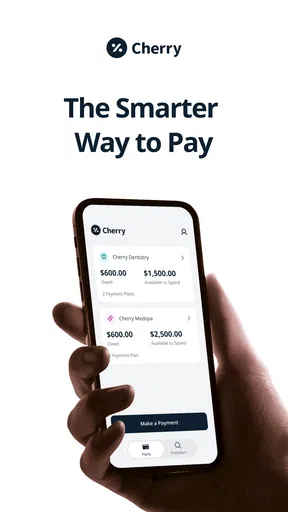
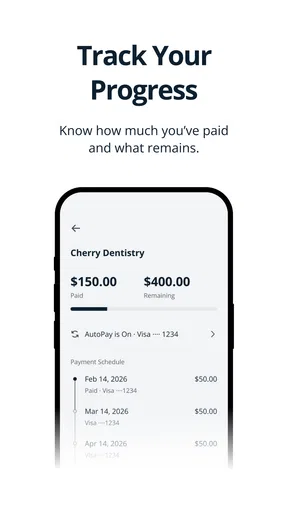

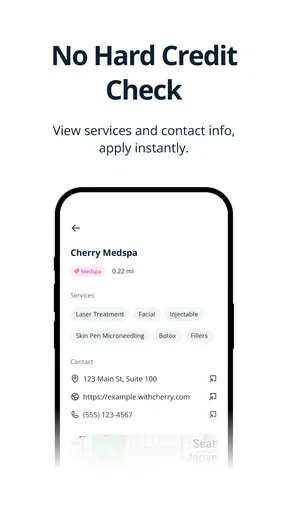
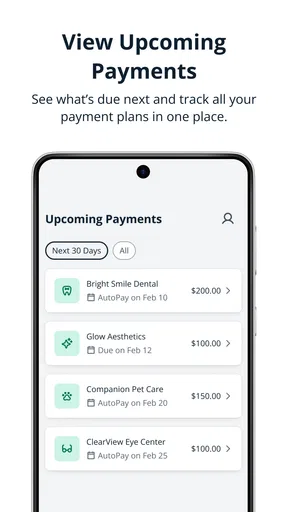
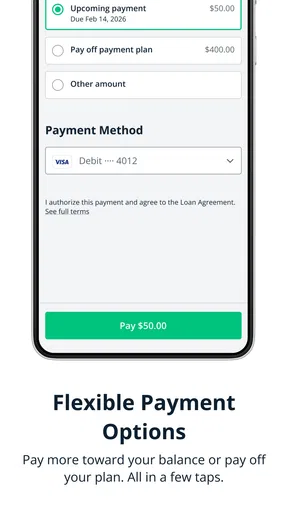
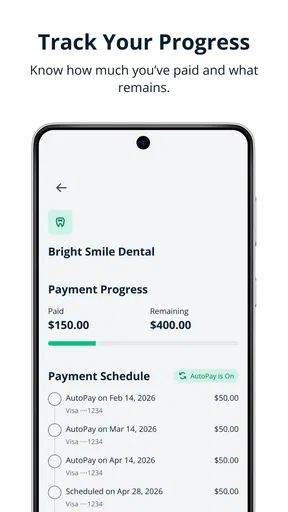
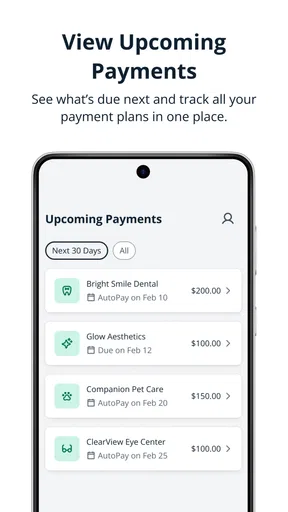
Our Review of Cherry: The Smarter Way to Pay
 Analysis by Appyee
I approached Cherry: The Smarter Way to Pay as a practical finance app rather than a general budgeting tool. Its central idea is simple: help me manage payment plans and pay according to my schedule. That makes it potentially useful when a purchase needs to be spread out, but it also means the app’s value depends heavily on how closely that payment-plan approach matches the way I already handle money.
Cherry is developed by Cherry Technologies, Inc. and is available free of charge. It is listed for Everyone, which makes the basic audience broad, although the financial decisions involved still call for adult judgment. The app belongs in the finance category, and its current release is version 1.3.0 for devices running Android 7.0 or later. I would not confuse the free download with a promise that every financial arrangement connected with a plan will have identical terms; the sensible approach is to review each plan carefully before committing.
How Cherry Fits Into Everyday Payments
The most useful way to understand Cherry is as a payment-scheduling companion. Instead of treating a purchase as one immediate expense, I can use the app’s plan-based approach to think about when money leaves my account and how that timing fits around other obligations. That is a narrower purpose than a full personal-finance suite, but the narrower focus can be an advantage when the immediate problem is managing a planned payment.
For example, imagine I need to organize a purchase near the end of the month, when rent, utilities, and regular subscriptions already compete for attention. A payment schedule can make the timing easier to see than a single large charge. The practical benefit is not that the purchase becomes cheaper automatically. The benefit is that I can examine the schedule before deciding whether the commitment fits my cash flow.
That distinction matters. Cherry is not something I would use as a substitute for a complete spending plan, savings strategy, or debt-management service. I see it as a focused tool for handling scheduled payments. If my main goal is to categorize every transaction, monitor investments, or build a long-term household budget, a traditional budgeting app will probably offer a better overall match.
The app has attracted over one hundred thousand installs, with a 4.5 average from around one hundred thirty ratings and fifty reviews. Those figures suggest that people are finding the concept useful, but they do not remove the need to inspect the details of an individual plan. A positive store response can tell me that the experience works for many users; it cannot decide whether a particular payment schedule is comfortable for my income.
What the free download means in practice
Cherry is free to download and use as an app, which lowers the barrier to trying its payment-focused workflow. I can explore whether the interface suits me without first paying for access to the application itself. That is a meaningful advantage over finance tools that place their main planning features behind a subscription from the start.
Still, I would separate three ideas: free app access, the terms of a payment plan, and the total cost of a purchase. Only the first is clearly expressed by the app’s price. A free download should not be read as evidence that every plan has no added cost or that every user receives the same arrangement. Before accepting anything, I would check the displayed schedule, the amount due at each stage, and the overall obligation.
This is one of the most important habits to develop with Cherry: use the app to improve visibility, not to justify spending beyond my means. A well-organized schedule can make a commitment easier to understand, but it can also make an unaffordable purchase feel deceptively manageable if I focus only on the next payment. I would always compare the complete commitment with my monthly budget.
Where the app can deliver genuine value
The strongest value comes from reducing mental friction. When several expenses arrive at different times, remembering which payment is due and when can become surprisingly difficult. A dedicated plan view gives that obligation a defined place instead of leaving it scattered across messages, notes, and bank statements.
I also like the possibility of using the schedule as a decision checkpoint. Rather than asking only, “Can I make the first payment?”, I can ask whether the full sequence remains realistic during a normal month. That small change in thinking is more valuable than simply having another place to tap a payment button.
A second useful insight is to review plans alongside fixed expenses, not in isolation. If I know that several recurring bills arrive during the same week, I should evaluate a Cherry schedule against that crowded period rather than against an average monthly balance. Payment timing can matter as much as the total amount, especially for people whose income arrives on a predictable but limited timetable.
A third practical use is keeping the app focused on active commitments. I would avoid treating it as a general financial diary. Instead, I would use it to check upcoming plan obligations, then record the resulting impact in my broader budget if I maintain one. This two-layer workflow prevents Cherry from becoming the only place where I track money while still letting it do the job it is designed for.
Questions I would answer before accepting a plan
The first question is whether the schedule is clear enough to understand without guesswork. I would look for the timing and amount of every expected payment, then compare those dates with my paydays and fixed bills. If I cannot explain the commitment in plain language, I would pause rather than proceed.
The second question is whether the arrangement remains manageable after an ordinary surprise expense. A plan that works only when nothing goes wrong is fragile. I would leave room for groceries, transport, medical needs, and other essentials instead of assigning every spare amount to a payment schedule.
The third question is what happens if my circumstances change. I would read any available terms inside the plan carefully and avoid assuming that a delayed payment, return, cancellation, or change of mind will be handled automatically. The app can organize a schedule, but I remain responsible for understanding the commitment attached to it.
The fourth question is whether I actually need a plan. If I can comfortably pay for the purchase and prefer fewer financial moving parts, paying normally may be simpler. Cherry is most convincing when scheduling improves control, not when it merely makes an unnecessary purchase easier to start.
Tradeoffs compared with ordinary alternatives
Compared with paying directly from a bank account or card, Cherry may offer a more deliberate view of timing. A conventional payment is straightforward: the amount leaves immediately, and there is no plan to monitor. That simplicity is valuable for people who have enough available money and do not want another financial workflow.
Compared with a standard budgeting app, Cherry appears more focused on the payment itself than on the entire financial picture. A budgeting tool may be better for assigning categories, setting savings targets, and reviewing spending across accounts. Cherry can complement that process, but I would not expect it to replace a full budget just because it helps organize plans.
Compared with informal methods such as calendar reminders or a spreadsheet, the app’s appeal is convenience and concentration. A spreadsheet can be more flexible, while a calendar can be enough for one occasional obligation. Cherry becomes more useful when I want payment-plan information kept together and prefer a purpose-built finance interface over manually maintaining rows and reminders.
There is also a behavioral tradeoff. Splitting a commitment into scheduled payments may improve short-term cash-flow control, yet it can make several simultaneous obligations harder to feel. I would therefore count active Cherry plans as real commitments in my budget, even when the next individual payment looks small. That is the difference between using the app thoughtfully and allowing payment timing to hide total exposure.
Who is likely to get the most from Cherry?
I think Cherry is best suited to someone who occasionally needs structured payment timing and wants a simple place to review those commitments. It may be especially helpful for a user who tends to forget dates, receives income on a regular schedule, or wants to compare a proposed plan with existing bills before agreeing to it.
It can also suit people who dislike the clutter of maintaining payment details in several places. The free access makes experimentation easier: I can determine whether the plan-centered approach fits my habits without adding an app subscription to my expenses. The Everyone age classification also means the app is presented for a broad audience, but younger or inexperienced users should still involve a trusted adult when evaluating financial commitments.
I would be more cautious if my income changes frequently, if I already have several installment obligations, or if I struggle to track recurring charges. In those situations, another payment plan may add complexity rather than solve it. A full budget with clear debt and cash-flow tracking could be a better first step.
I would also skip Cherry if I am looking for investment management, credit education, detailed expense analytics, or a complete household-finance dashboard. Its purpose is more specific. Choosing it for those broader needs would likely lead to disappointment, not because the app is necessarily poor, but because the problem would be larger than its payment-plan focus.
My practical routine for using it responsibly
My preferred routine would begin before confirming a purchase. I would open the plan details, note the full schedule, and compare each payment date with my income and essential bills. I would then check the total commitment rather than judging affordability by the first amount alone.
After accepting a plan, I would review upcoming obligations on a regular schedule instead of waiting for a reminder or an unexpected account deduction. I would also keep a separate overall budget, even if it is only a simple monthly note. That gives me a wider view and reduces the risk of treating Cherry as permission to spend money that is already assigned elsewhere.
For a household, I would make sure the person responsible for the shared budget knows about the plan. Payment schedules can be easy to overlook when only one person uses the app. A short conversation about the dates and total obligation can prevent duplicated spending and makes the tool more useful than a private reminder system.
Version 1.3.0 is the current version I would look for when installing, and the Android requirement of 7.0 or later keeps it accessible to many older devices. I would still keep the app updated through the normal store process, because finance applications benefit from using the latest available release. The developer is Cherry Technologies, Inc., and the app’s established install base gives it more practical visibility than a brand-new finance experiment.
My verdict on the value
My opinion is favorable, but deliberately limited: Cherry is worth trying when the problem is payment timing and plan organization. Its free price is a strong reason to test the workflow, while the 4.5 average indicates that the basic experience has resonated with many users. The real value, however, comes from using the app to make a complete commitment easier to inspect, not from assuming that scheduled payments are automatically better.
I would recommend it to a friend who wants a focused way to manage planned payments, especially if that person already keeps a broader budget and needs an additional layer for timing. I would not recommend it as the only finance app for someone who needs detailed spending analysis or long-term financial planning.
My buy-or-skip verdict: try Cherry if you need payment-plan structure, but skip it if a direct payment or a full budgeting tool would be simpler. Because the app itself is free, the decision is mainly about fit and financial discipline. If its schedule view helps me see obligations clearly and avoid missed timing, it earns a place on my phone. If it encourages me to focus on small installments while ignoring the complete cost, I would rather use a simpler alternative.
In short, Cherry offers a focused answer to a specific money-management problem. I appreciate that its purpose is easy to understand, and I like the possibility of matching payments with a real monthly routine. I would approach every plan with care, maintain a separate view of my total finances, and treat the app as a planning aid rather than a reason to stretch my budget.
Verdict
Strengths of Cherry: The Smarter Way to Pay
- Splits purchases into manageable installments with clear repayment schedules.
- Can help spread the cost of larger purchases without using a traditional credit card.
- Digital application process is convenient and generally quick to complete.
- Useful payment tracking tools help users monitor upcoming installments.
- May offer access to partner retailers and exclusive financing promotions.
Limitations of Cherry: The Smarter Way to Pay
- Late or missed payments may lead to fees or affect your credit profile.
- Eligibility, spending limits, and available plans vary by applicant.
- Installment payments can encourage overspending if used without a budget.
- Not every retailer or purchase category may be supported by Cherry.
- Terms, fees, and promotional conditions should be reviewed before checkout.
Similar Picks in This Category
View All
Google Wallet
Google LLC4.3

Airtel: Recharge, Bank & Loans
Airtel4.0

PayPal - Pay, Send, Save
PayPal Mobile4.2

DANA Indonesia Digital Wallet
PT Espay Debit Indonesia Koe4.5

Binance: Buy Bitcoin & Crypto
Binance Inc.4.8

Cash App
Block, Inc.4.7
Frequently Asked Questions
What is Cherry: The Smarter Way to Pay?
Cherry is a payment and financing platform designed to help customers split eligible purchases into scheduled installments instead of paying the full amount upfront. It is commonly offered by participating merchants at checkout, especially for higher-value products or services. Available payment plans, approval decisions, fees, and repayment terms can vary depending on the merchant, purchase amount, and the customer’s application details.
How does Cherry financing work at checkout?
When Cherry is available through a participating merchant, you select it as a payment option and provide the requested personal and financial information. Cherry may perform an eligibility or credit assessment before displaying available plans. If approved, you review the repayment schedule and complete the purchase. The exact number of installments, payment dates, total cost, and any applicable fees should be checked carefully before accepting the agreement.
Does using Cherry require a credit check?
Cherry may use information from your application to determine whether you qualify for financing, and the type of credit inquiry can depend on the product, merchant, and applicable terms. Approval is not guaranteed, even if you have used similar payment services before. Before submitting an application, review the disclosures explaining eligibility, potential credit reporting, interest or fees, and how missed payments may affect your account.
Are there fees or interest charges when paying with Cherry?
The cost of using Cherry depends on the specific financing plan offered to you. Some plans may advertise no interest when paid according to the agreement, while others may include interest, service charges, or other costs. Promotional terms can also differ between merchants. Always inspect the final checkout summary and financing disclosure for the annual percentage rate, total repayment amount, fees, and consequences of late payments.
What happens if I miss a Cherry payment or need a refund?
Missed payments can lead to late fees, account restrictions, collection activity, or negative credit consequences, depending on the agreement and applicable laws. If you need to return an item or cancel a service, contact the merchant first because refunds are generally handled according to the merchant’s policy. A refund may not immediately cancel scheduled payments, so confirm with Cherry that your financing balance has been updated.
